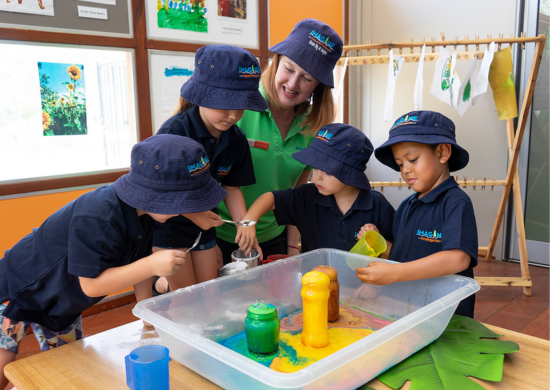
At Imagine Childcare, we believe science is a way for children to explore, question, and discover the world around them every day.
This National Science Week, we’re sharing a collection of simple, age-appropriate science experiments you can try at home with your little one. These activities are fun and engaging, and they also help build important skills such as problem-solving, observation, and prediction—skills we nurture through science-based learning experiences across our centres.
At a glance: Eight simple science activities for babies, toddlers and preschoolers, using everyday materials to explore colour, sound, movement, prediction, and cause and effect.
Safety note: An adult should supervise every activity. Keep small objects, balloons, food colouring, baking soda, and vinegar away from children’s mouths, and securely seal sensory bottles before use.
Babies (0–1 years)
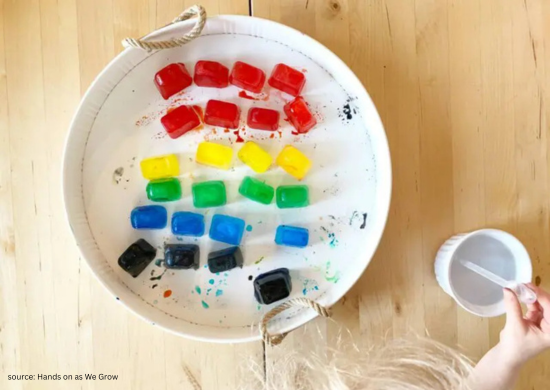
Rainbow Ice
Create colourful ice cubes using water and a few drops of food colouring. Place them in a large container or sensory tray and let your baby explore the melting ice. You can add a small container of warm water for them to experiment with melting the ice faster.
This activity encourages sensory exploration through temperature, texture, and colour while helping babies develop early observation skills. They begin to understand cause and effect as they notice the ice melting more quickly in warm water, and their language skills grow as you introduce new words like “cold,” “melting,” “blue,” and “mixing.”
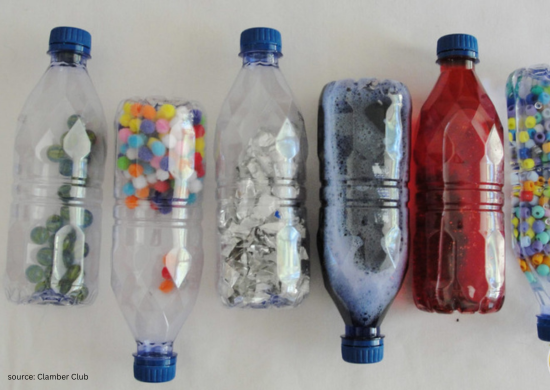
Sound Bottles
Fill a clear, empty plastic bottle with items such as beads, rice, or bells. Let your baby shake the bottle to explore the different sounds each filling makes.
Shaking the bottle helps babies discover cause and effect while developing their listening skills as they hear the different sounds. It also promotes fine motor development through grasping and shaking, as well as visual tracking, as they watch the items move inside the bottle.
Toddlers (1–3 years)
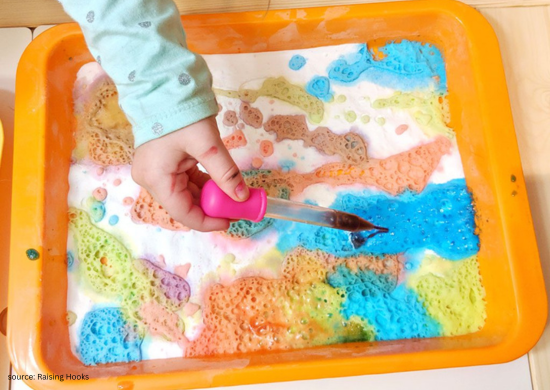
Fizzing Colours
Add baking soda to a tray. Mix vinegar and food colouring in small cups, then use droppers to release the coloured vinegar onto the baking soda. Watch the fizzy reaction unfold right in front of your eyes!
This experiment introduces Toddlers to basic chemistry as they watch the acid and base reaction create fizz. They strengthen colour recognition and begin exploring colour mixing, while using droppers supports fine motor skills. Asking them to guess what will happen next also encourages curiosity and early prediction skills.
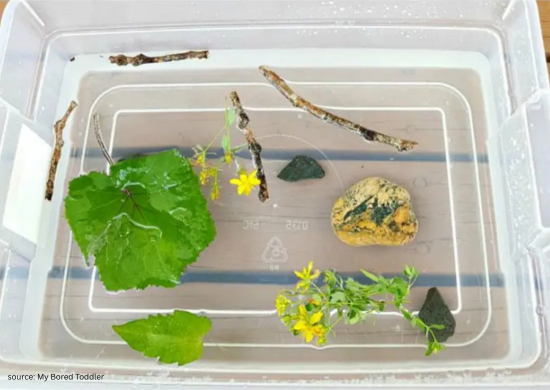
Sink or Float
Fill a large tub with water. Collect natural materials from around the home. Before dropping each item in, ask your child to guess: “Will this sink or float?”
This hands-on activity helps Toddlers begin to think like scientists by making predictions and testing their ideas. They practise categorisation skills and start to understand buoyancy, while also expanding their vocabulary with words such as “heavy,” “light,” “float,” and “sink.”
Pre-Kindy (3–4 years)
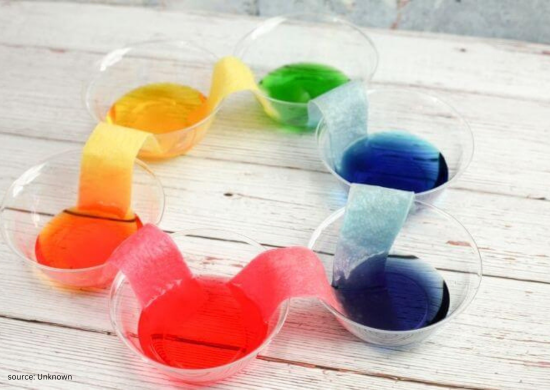
Walking Rainbow
Arrange jars of water coloured with food dye and blank water in a circle, alternating blank water with coloured water. Place a strip of paper towel between each jar, making sure the ends dip into the water. Watch the colours travel and mix over time.
Children strengthen their observation skills as they watch the colours slowly move, mix, and blend over time. This experiment introduces them to absorption and capillary action in a visual way, supports their understanding of colour mixing, and encourages them to talk through the sequence of events they see.
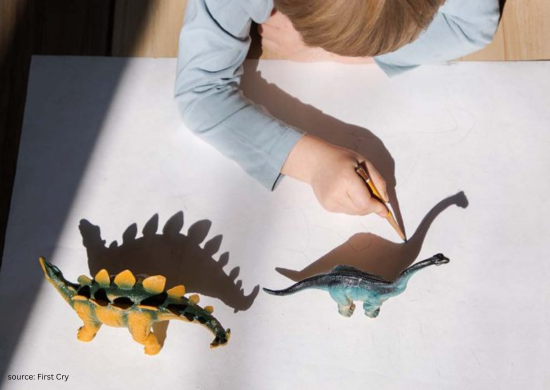
Shadow Tracing
Lay paper or card next to an object’s shadow and have your child trace its outline. Return throughout the day to see how the shadow has changed.
Shadow tracing helps children understand how the position of the sun changes shadows throughout the day. It also develops early measurement and comparison skills, supports fine motor control through drawing, and sparks curiosity about nature and the passing of time.
Kindergarten & Preschool (4–5 years)
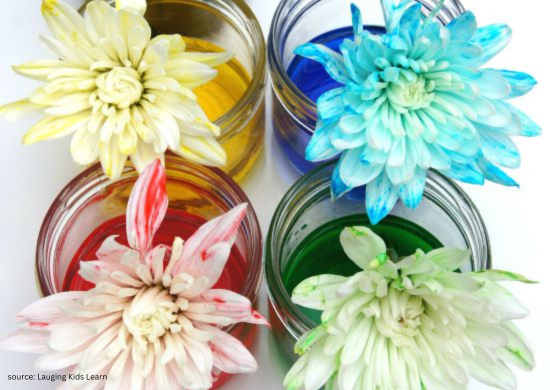
Colour Changing Flowers or Celery
Place white flowers or celery stalks in a jar of coloured water. Over time, the stems will draw up the coloured water and change colour.
This activity introduces children to plant biology by showing how plants absorb water through their stems. It encourages them to observe and record changes over time, developing patience, attention to detail, and early scientific thinking.
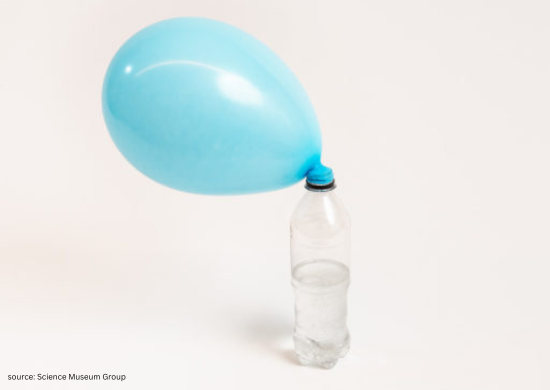
Blowing Up a Balloon With Gas
Use a funnel to insert baking soda into a deflated balloon. Fill a bottle with vinegar, then carefully attach the balloon to the bottle’s neck without spilling the baking soda. Lift the balloon so the baking soda falls in. This will create a fizzy reaction, causing gas to inflate the balloon.
This experiment demonstrates chemical reactions and gas formation in a way children can see and enjoy. It promotes problem-solving and sequencing as they follow the steps, encourages them to make predictions, and gives them a memorable “wow” moment that builds excitement for science.
At Imagine Childcare, science is part of our everyday play-based learning approach. From sensory exploration with our youngest babies to hands-on STEM projects with our older children, we create opportunities for children to investigate, experiment, and discover.
By trying these activities at home, you’re extending your child’s learning and giving them the chance to see science as something fun, exciting, and part of the world around them. You can also explore more ideas in our article about early childhood learning through sensory play.
Want to see this learning in action? Find an Imagine Childcare centre near you or book a tour.
To further enrich these activities, you can use the Abecedarian Approach Australia (3a) Language Priority by talking your child through each reaction and change they observe during the experiment. This ongoing conversation helps build their communication skills and introduces them to a wider range of new words.
Follow us on Facebook to keep up to date with our Imagine Childcare centres and see how we have acknowledged and celebrated National Science Week this week:
- Imagine Childcare and Kindergarten Andergrove
- Imagine Childcare and Kindergarten Bushland Beach
- Imagine Childcare and Kindergarten Southport
- Imagine Childcare and Kindergarten Collingwood Park
- Imagine Childcare and Kindergarten Fairfield Waters
- Imagine Childcare and Kindergarten Flagstone
- Imagine Childcare and Kindergarten Holmview
- Imagine Childcare and Kindergarten Jensen
- Imagine Childcare and Kindergarten Marsden
- Imagine Childcare and Kindergarten Maryborough
- Imagine Childcare and Kindergarten Nerang
- Imagine Childcare and Kindergarten Rochedale South
- Imagine Childcare and Kindergarten West End
- Imagine Childcare and Kindergarten Coburg
- Imagine Childcare and Kindergarten Cranbourne
- Imagine Childcare and Kindergarten Oakleigh South
- Imagine Childcare and Kindergarten Werribee
- Imagine Childcare and Kindergarten Blakeview
- Imagine Childcare and Preschool Ballina
- Imagine Childcare and Preschool Blueridge Park
- Imagine Childcare and Preschool Grafton
- Imagine Childcare and Preschool Nowra
- Imagine Childcare and Preschool Orange
- Imagine Childcare and Preschool Tamworth
Imagine Childcare and Kindergarten Smithfield and Imagine Childcare and Kindergarten Melton are opening soon. Follow them on Facebook to receive regular updates on their progress.
Discover more about learning at Imagine Childcare, or find your nearest centre.